Salt and Water
by Khana Dias LMT
We all know the importance of drinking plenty of water throughout the day. However did you know that consuming a good quality unrefined/unprocessed salt which is our electrolytes, is just as important for the body to be able to absorb the water properly?
This video by Barbara O'Neill is excellent to watch as she makes it simple in understanding the body's way on processing salt and water and how many different symptoms the body shows when it's dehydrated. You will never look at salt and water the same way again.
by Khana Dias LMT
We all know the importance of drinking plenty of water throughout the day. However did you know that consuming a good quality unrefined/unprocessed salt which is our electrolytes, is just as important for the body to be able to absorb the water properly?
This video by Barbara O'Neill is excellent to watch as she makes it simple in understanding the body's way on processing salt and water and how many different symptoms the body shows when it's dehydrated. You will never look at salt and water the same way again.
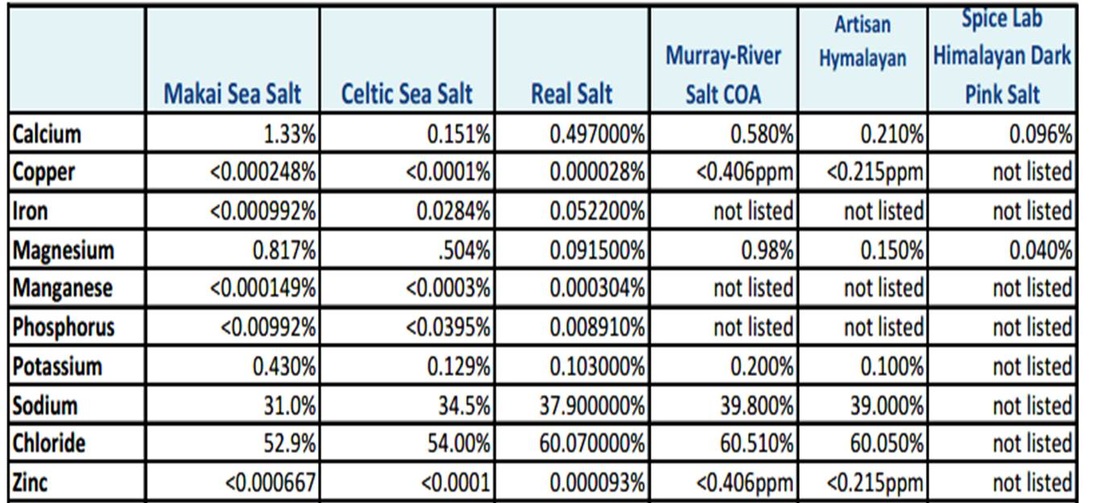
Barbara mentions few different salts in this video. In addition to the recommendations I added few others to the list.
- Himalayan salt, a salt we have been using in our home which I thought was a good quality as so many doctors recommend it. However after seeing the mineral analysis from two different companies that sell it, I was a little disappointed, as you can see the chart bellow some levels of minerals were not included by the company and the ones that were, it's lower from other salts.
- Celtic Sea salt is sold by Salina Naturally good salt for cooking.
- Macrobiotic salt. The company is located in Australia. They don't normally ship to US as the shipping costs more then the salt so I did not include it in this chart.
- Murray River salt you can find on www.saltworks.us. It was nice that I did not have to call the company as they have the mineral analysis on their site.
- Real Salt many may have seen it in stores.
- Makai Sea Salt although Barbara does not mention this salt however after seeing the mineral analysis, this has become our go to for using it in water/salt protocol.
About Barbara O'Neill:
www.barbhealth.com
Barbara O’Neill, author, educator, qualified naturopath and nutritionist, is also an international speaker on natural self-healing. She has raised eight children and is a specialist in women’s and children’s health. Barbara is passionate about good health and natural healing. She believes in giving the body optimum conditions in order for it to heal itself.
She is also the health director of the successful Misty Mountain Health Education & Wellness Retreat, located in Australia.
For more information about the importance of salt and water visit www.watercures.org
www.barbhealth.com
Barbara O’Neill, author, educator, qualified naturopath and nutritionist, is also an international speaker on natural self-healing. She has raised eight children and is a specialist in women’s and children’s health. Barbara is passionate about good health and natural healing. She believes in giving the body optimum conditions in order for it to heal itself.
She is also the health director of the successful Misty Mountain Health Education & Wellness Retreat, located in Australia.
For more information about the importance of salt and water visit www.watercures.org
Testimonial:
For the clients that come in with any types of pain or who have active lifestyles, I share the information about importance of good quality unrefined salt and water. Here is a testimonial from one of my clients who started the salt/water protocol that you can find here.
"Water has benefited both my daughter and I. I was recently really injured and was in almost constant pain. I started using salt twice a day followed by 10-16 oz of water and within a week I really turned a corner as far as pain management goes.
Similarly, my daughter is an athlete and she plays club volleyball. Typically on a tournament weekend she will play anywhere from 4-8 games. Often they will have a break between At least two of the games. This is when her energy and alertness starts to wane. I see a real drop in productivity in the matches after a break. This weekend I gave her salt and water right after the breaks and noticed almost no difference in her playing!" ~Sara
For the clients that come in with any types of pain or who have active lifestyles, I share the information about importance of good quality unrefined salt and water. Here is a testimonial from one of my clients who started the salt/water protocol that you can find here.
"Water has benefited both my daughter and I. I was recently really injured and was in almost constant pain. I started using salt twice a day followed by 10-16 oz of water and within a week I really turned a corner as far as pain management goes.
Similarly, my daughter is an athlete and she plays club volleyball. Typically on a tournament weekend she will play anywhere from 4-8 games. Often they will have a break between At least two of the games. This is when her energy and alertness starts to wane. I see a real drop in productivity in the matches after a break. This weekend I gave her salt and water right after the breaks and noticed almost no difference in her playing!" ~Sara
There are also good quality products that you can purchase which have a great source of electrolytes. One of them is Oxylent multivitamin. Not only does it have your daily vitamins but it also has electrolytes.
It's also easy to make your own electrolyte drinks using ingredients that you most likely have in your kitchen. As recommended by WHO and UNICEF recipe and guidelines for oral rehydration salts (ORS) this is their recipe.
- 6 teaspoons sugar (Good quality unrefined sugar is always a better choice)
- 1/2 teaspoon salt
- 1 liter (or 4.2 cups) of filtered drinking water
This recipe I have been making for our family. This is a basic recipe and every so often I will also add Blackstrap Unrefined Molasses.
1/4 cup Raw Honey
1/4 cup Fresh Squeezed lemon juice
1 tsp of Makai or Celtic sea salt
7 Cups water
I like to blend my salt with lemon first to make sure the salt is dissolved. Then add honey to the mix and after it's mixed add the water. But there is no set ways in mixing it as you can add everything in blender. Also you can modify the recipe to your taste buds.
As a rule of thumb with any ingredients you want to use fresh and organic to make sure the end quality is healthy.
Disclaimer: The information on this Web site is designed for educational purposes only. It is not intended to be a substitute for informed medical advice or care. You should not use this information to diagnose or treat any health problems or illnesses without consulting your doctor. Please consult a doctor with any questions or concerns you might have.



 RSS Feed
